Trump-Linked Panel Examines Stablecoin Proposal For Postwar Gaza
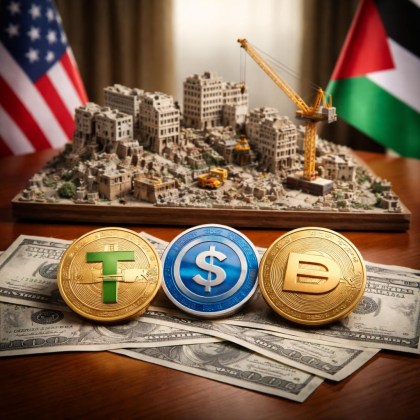
Officials advising President Donald Trump’s US-led «Board of Peace» are examining a novel proposal to utilize a dollar-backed stablecoin as a potential tool for rebuilding Gaza’s shattered economy in a postwar scenario. This concept, while still in its preliminary stages, represents a significant exploration of how digital currency infrastructure could be deployed in one of the world’s most complex and damaged economic environments.
The Genesis of a Digital Currency Proposal
The idea, first reported by the Financial Times, is being considered as part of a broader plan to revive economic life in the Palestinian enclave following two years of devastating war between Israel and Hamas. The conflict has left much of Gaza’s traditional financial system crippled, creating a vacuum that policymakers are now seeking to address with forward-looking solutions. According to five individuals briefed on the talks, conversations about introducing a stablecoin remain exploratory, with key operational and regulatory details yet to be finalized.
The proposed stablecoin would be pegged to the US dollar, aiming to provide a stable store of value and medium of exchange in an economy plagued by instability. One person familiar with the project indicated that the initiative would likely involve Gulf Arab and Palestinian companies with existing experience in digital currency infrastructure, suggesting a partnership model that draws on regional expertise. The ultimate authority to determine the regulatory framework and access rules for any such system would rest with the Board of Peace and the 14-member National Committee for the Administration of Gaza (NCAG), though sources stress that «nothing definitive» has been agreed upon.
Potential Strategic Benefits: Security and Autonomy
Supporters of the initiative point to several potential benefits, with a primary focus on security and economic autonomy. A central argument is that reducing Gaza’s reliance on physical cash could significantly limit the ability of Hamas to generate revenue through informal channels. One individual familiar with the talks explicitly described the goal as an effort to «dry Gaza from cash so Hamas can’t generate any,» framing the digital currency as a tool for financial counter-terrorism.
Beyond security, advocates contend that expanding digital payments would allow commerce to continue and rebuild without being overly dependent on Israeli authorities’ control over the flow of physical currency, like the Israeli shekel, into the territory. A stable, digitally-native financial system could, in theory, facilitate faster reconstruction aid, enable more efficient remittances from the Palestinian diaspora, and allow local businesses to transact with greater ease in a landscape where banking infrastructure has been severely degraded.
Significant Risks and Economic Concerns
However, the proposal is not without its critics and substantial risks. Others involved in the discussions have voiced a major concern: that creating a Gaza-specific digital financial system could inadvertently deepen the economic and political divide between Gaza and the West Bank. The two territories, though both envisioned as part of a future Palestinian state, have long been separated, and their economies operate under different constraints.
«It will be much more difficult to maintain economic links between Gaza and the West Bank if they have no means of easy payment between the two,» one person familiar with the talks cautioned. «Gaza would be almost like a self-contained economy. That would be a concern.» This fragmentation risk is a serious consideration, as long-term Palestinian economic viability is generally seen as dependent on greater unity between the territories. Furthermore, the success of any stablecoin project would hinge on widespread trust in the backing entity, reliable digital access for a population facing immense infrastructure challenges, and robust safeguards against cyber theft or technical failure.
A Preliminary Concept Amidst Broader Plans
For now, the stablecoin proposal remains an exploratory concept on the drawing board of officials linked to the Trump-advised Board of Peace. Its advancement would be contingent upon a stable postwar environment, which itself is far from certain. The discussions highlight the increasing intersection of geopolitical strategy, post-conflict reconstruction, and financial technology. While the concept of using a digital dollar peg to stabilize a war-torn economy is innovative, it underscores the monumental challenges facing Gaza’s recovery, where any financial system must balance aspirations for growth and autonomy with practical concerns of security, unity, and feasibility. The proposal’s future will depend on the evolution of both the political landscape and the detailed planning necessary to turn a high-concept idea into a functional, trusted, and inclusive economic tool.
